
Delta’s refinery strategy could shield it from the impact of rising fuel expenses affecting the airline industry

Airline Stocks Plunge Amid Middle East Conflict
On Monday, airline shares experienced a sharp decline following a sudden and significant disruption to operations and costs. The escalation of tensions involving the U.S., Israel, and Iran over the weekend led to widespread chaos, resulting in over 11,000 flights to and from the Middle East being canceled and impacting more than one million passengers. Dubai International Airport, a major global hub, was forced to halt all flights, underscoring the severity of the situation.
Beyond operational turmoil, the conflict triggered a surge in oil prices, with prices climbing 15% to exceed $105 per barrel. This spike directly affected airlines' largest expense—fuel. Jet fuel costs have doubled for some carriers since the conflict began, compounding challenges for airlines already facing expensive rerouting. To illustrate, fuel accounts for 17% of Delta’s costs, 21% for United, and 20% for American Airlines.
- American Airlines shares fell 4.2%
- United Airlines dropped 2.9%
- Delta Airlines declined 2.2%
These rapid declines reflect investor anxiety over stranded travelers, canceled lucrative routes, and soaring fuel expenses threatening profitability. The turmoil extended to the broader travel industry, with cruise companies also suffering losses.
Financial Fallout: Hedged vs. Unhedged Carriers
While the immediate market reaction was swift, the longer-term financial impact depends on whether airlines are shielded by fuel hedges. For those without hedging, every dollar increase in oil price directly reduces profits. Fuel remains a substantial cost—17% for Delta, 21% for United, and 20% for American Airlines.
Unhedged U.S. airlines are already feeling the effects. United’s CEO, Scott Kirby, warned that the spike in fuel prices will have a significant negative impact on first-quarter earnings. According to regulatory filings, a one-cent rise in fuel price per gallon increases American’s annual expenses by $50 million and Delta’s by $40 million.
Backtest: Absolute Momentum Long-Only Strategy
- Buy AMZN when the 252-day rate of change is positive and price closes above the 200-day SMA.
- Sell when price closes below the 200-day SMA, after 20 trading days, or if profit reaches +8% or loss hits -4%.
- Backtest period: last 2 years.
- Strategy Return: -11.73%
- Annualized Return: -4.82%
- Max Drawdown: 13.6%
- Profit-Loss Ratio: 1.07
- Total Trades: 15
- Winning Trades: 6
- Losing Trades: 9
- Win Rate: 40%
- Average Hold Days: 11.4
- Max Consecutive Losses: 3
- Avg Win Return: 5.38%
- Avg Loss Return: 4.7%
- Max Single Return: 9.99%
- Max Single Loss Return: 7.53%
Delta’s Refinery Advantage
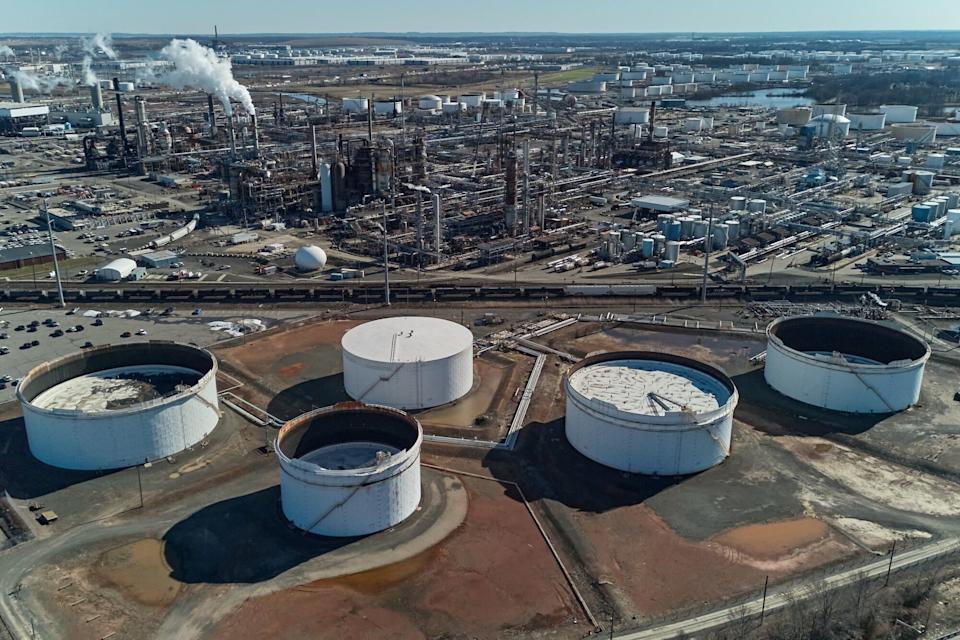
Delta stands out among U.S. airlines due to its ownership of a 190,000-barrel-per-day refinery, which provides some protection against volatile refining margins. This gives Delta a structural edge in managing fuel costs, unlike its competitors who are fully exposed to fluctuating jet fuel prices, which have surged 15% in the past week to levels not seen since 2022.
In summary, U.S. airlines without hedges face a dual challenge: rising costs and warnings of reduced earnings. The initial market sell-off reflected these risks, but the ultimate financial impact will depend on how long the conflict lasts and whether airlines can pass higher fuel costs onto customers. The pressure is real and affects carriers unevenly.
Valuation and Scenario Analysis
The market’s response was a broad reassessment of risk, affecting not only airlines but also the wider travel sector. Cruise line stocks dropped sharply, with Royal Caribbean down 3%, Carnival losing over 7%, and Norwegian falling 10%. This indicates investors are bracing for a prolonged downturn in travel demand, not just a short-term disruption. The duration of the conflict remains the biggest unknown. President Trump suggested the attacks could last four to five weeks, which will determine the extent of the financial strain. If contained, the impact may be limited; if prolonged, a deeper slump is likely.
Short-term resilience is evident, but warning signs persist. Deutsche analysts cautioned that without relief soon, airlines worldwide may need to ground thousands of planes. The operational chaos and soaring fuel prices are already causing significant disruptions, with massive flight cancellations and reduced passenger traffic. The market is also preparing for the possibility of a more severe, extended downturn if the conflict continues. Financial strain from fuel costs is being measured for unhedged carriers and will worsen with prolonged grounding and lost revenue.
Airline stocks now face heightened volatility and binary outcomes. Current prices reflect immediate shocks but are also influenced by uncertainty over the conflict’s duration. Investors must decide if the sell-off has overstated earnings risks. Evidence suggests carriers with robust hedges and operational buffers are better protected, while those without face direct margin hits. The event-driven catalyst has led to temporary mispricing, and recovery depends entirely on how quickly the conflict is resolved.
Key Catalysts and Risks
While the market has absorbed the initial shock, future movements will depend on several clear indicators. The thesis of temporary mispricing is tied to the conflict’s length and its impact on costs and operations. Three near-term developments will determine the outcome:
- Strait of Hormuz: This maritime chokepoint handles 20% of global oil. Any sustained disruption here would confirm fears of a prolonged supply shock, keeping oil and jet fuel prices elevated. The Strait is the most critical geographic signal for whether the economic fallout is contained or worsening.
- Oil Price Levels: The conflict has pushed oil above $105 per barrel and doubled some jet fuel prices. If prices drop below $105, it would signal easing tensions and reduced cost pressure. If prices rise further, it could lead to widespread grounding of aircraft and increased financial stress for vulnerable airlines.
- Airline Operational Updates: After the initial wave of cancellations, the next step will be route suspensions. Watch for announcements about permanent or semi-permanent shutdowns of key Middle Eastern routes, which will affect revenue and require costly reroutes. Changes in fuel hedging strategies may also signal a shift, as carriers reconsider their approach in response to the crisis.
Stock prices will now react to these specific, measurable events. The initial drop was a response to immediate shocks; future moves will be driven by developments in the Strait, oil prices, and airlines’ operational strategies.
Investment Perspective: Tactical Opportunity or Justified Decline?
The recent sell-off has created a clear distinction between justified losses and potential mispricing. For unhedged U.S. airlines, the pain is immediate and measurable. United’s CEO has already warned of a significant impact on first-quarter earnings due to fuel costs, which make up 21% of expenses. Operational disruptions are also severe, with over 11,000 flights canceled and major hubs like Dubai grounded. This combination of stranded passengers and rising costs justifies the repricing of near-term earnings risk.
However, tactical opportunities may exist for carriers with structural advantages. Delta’s refinery provides a partial hedge that others lack. The demand shock may also be less severe than anticipated, as business and essential travel could remain resilient. The key factor is whether the conflict resolves within the estimated four to five weeks. A quick resolution would contain fuel costs and allow a rapid recovery for well-positioned airlines like Delta.
Ultimately, the situation presents a binary scenario. The decline is warranted for unhedged carriers, but the broader sell-off may have exaggerated risks for the sector’s strongest players. Investors should focus on airlines with operational and financial buffers, betting that a contained conflict will lead to a swift, event-driven rebound.
Disclaimer: The content of this article solely reflects the author's opinion and does not represent the platform in any capacity. This article is not intended to serve as a reference for making investment decisions.
You may also like
King's College's Aluminum Innovation May Transform Rare-Earth Supply Chains
Ukraine’s Deep Strikes on Russia’s Industrial Base Test Market Bets on Defense Sector Resilience
Blend Labs: Fourth Quarter Financial Results Overview
Oil Drops 12% Amid Uncertainty Surrounding Hormuz Shipping Status
Trending news
MoreCrypto prices
More





