
Epsilon Energy’s Hybrid Approach Manages Natural Gas Price Challenges—Midstream Strength Balances Upstream Fluctuations in Fourth Quarter Results

Epsilon Energy’s Dual Cash Flow Model
Epsilon Energy has restructured its operations around two primary sources of cash flow. The upstream division, now the company’s main revenue generator, focuses on natural gas extraction. In the first quarter of 2025, this segment alone brought in $16.16 million in sales. When combined with other upstream activities, total trailing revenue reached $45.71 million by the third quarter of 2025.
Balancing this is the midstream segment, which delivers reliable, fee-based earnings. The Auburn Gas Gathering System contributed $1.845 million in revenue during the second quarter of 2025. Management anticipates this asset will generate about $9 million annually, providing steady cash flow that is largely immune to fluctuations in commodity prices.
Financially, Epsilon is well-positioned to support this two-pronged approach. The company boasts a debt-free balance sheet and significant cash reserves, enabling it to fund capital projects—such as the $4 million invested in Q2 2025—while also pursuing growth opportunities. This hybrid structure is designed to blend the expansion potential of upstream operations with the stability offered by midstream assets.
Upstream Market Dynamics and Price Pressures
Epsilon’s upstream business is currently navigating an environment of abundant supply and restrained demand, which has resulted in downward pressure on natural gas prices. The U.S. Energy Information Administration (EIA) recently lowered its 2026 Henry Hub price estimate to an average of $3.80 per MMBtu, a 13% drop from the previous month. This revision is largely due to milder weather in February, which increased storage levels and eased short-term price concerns.
U.S. natural gas output remains robust, reaching a record 118.5 Bcf/d in November, with the EIA projecting an average of 117.8 Bcf/d through the winter. Most of this growth comes from associated gas in the Permian and other Lower 48 regions, which has helped offset temporary weather-related disruptions. For example, during Winter Storm Fern in late January, spot prices soared to $30.72 per MMBtu, but quickly returned to normal seasonal levels by mid-February.
Despite global supply interruptions, such as those stemming from Middle East conflicts, U.S. prices have not found support. LNG exports through the Strait of Hormuz have been affected, but domestic prices remain stable because U.S. LNG facilities were already operating near full capacity before these events. While new export capacity at Corpus Christi State 3 and the upcoming Golden Pass Train 1 may offer future flexibility, they are unlikely to significantly impact prices in the short term.
For Epsilon, this results in a turbulent and pressured environment for upstream revenues. The company’s Q1 2025 natural gas sales of $16.16 million are closely tied to these volatile prices. The brief surge to $30.72 per MMBtu was an outlier, and with current prices around $3.26/MMBtu and a projected 13% annual decline, Epsilon faces a challenging revenue outlook. However, the consistency of midstream income helps cushion these fluctuations.
Financial Outlook and Q4 Projections
The current commodity landscape sets up a contrast for Epsilon’s upcoming fourth-quarter results, with upstream challenges offset by midstream reliability. Analysts anticipate earnings of $0.04 per share and $11.362 million in revenue for the quarter, heavily influenced by realized natural gas prices, which remain under pressure due to oversupply.
The upstream division, which posted $16.16 million in sales last quarter, is contending with the EIA’s forecast of a 13% annual drop in Henry Hub prices, squeezing its revenue potential. Although Epsilon’s 213 Bcfe pro-forma reserves and focus on the Marcellus Shale provide a solid production base, near-term results are highly sensitive to market prices. The segment’s volatility is evident, with spot prices spiking to $30.72 per MMBtu during a winter storm before quickly normalizing, making quarterly performance unpredictable.
Conversely, the midstream business offers stability. The Auburn Gas Gathering System is expected to bring in about $9 million in annual revenue and over $7 million in EBITDA, providing a dependable, fee-based income stream that helps offset upstream volatility. With no long-term debt, Epsilon can manage capital investments and growth without relying solely on unpredictable upstream cash flows.
Ultimately, Q4 results are likely to reflect the push and pull between these two segments. The projected $0.04 per share in earnings suggests that midstream income is sufficient to maintain profitability, even as upstream revenues face headwinds. The company’s robust balance sheet and a recently announced dividend yield of 4.6% demonstrate management’s confidence in its financial foundation. However, future earnings growth will depend on whether natural gas prices stabilize or recover. For now, Epsilon’s hybrid model is holding up, but its financial performance remains closely tied to commodity price trends.
Upcoming Catalysts, Risks, and Key Considerations
The next major event for Epsilon Energy is its fourth-quarter earnings call, scheduled for Wednesday, March 25, 2026, at 11:00 AM ET. This will offer the first detailed insight into how the company’s hybrid strategy has performed amid challenging market conditions. The market is looking for $0.04 per share in earnings and $11.362 million in revenue. Investors will be watching closely for management’s commentary on realized gas prices in the upstream segment and whether midstream income met expectations. Any surprises, especially regarding upstream performance, could impact the stock price.
The main short-term risk is the possibility of further downward revisions to natural gas price forecasts. The EIA has already reduced its 2026 Henry Hub average to $3.80 per MMBtu, a 13% cut from last month, due to record U.S. output and high storage levels. Additional downward adjustments would directly pressure Epsilon’s upstream revenues, even if production remains steady. While new export capacity at Corpus Christi State 3 and Golden Pass Train 1 may help in the future, they are not expected to provide significant price support in the near term.
Investors should also keep an eye on Epsilon’s capital allocation strategy. Management has outlined plans for 2025 capital expenditures between $9 million and $12 million, targeting growth in Texas and Alberta. The company’s ability to sustain this investment, pay dividends, and support midstream operations will test the resilience of its hybrid model. The recent approval of a share buyback program, though not yet implemented, signals confidence in Epsilon’s financial strength.
In summary, the company’s stock performance will depend on two key factors: whether Q4 results confirm that midstream stability can offset upstream challenges, and how well Epsilon navigates a market where commodity price forecasts are trending lower. The upcoming earnings call will be a crucial indicator on both fronts.
Disclaimer: The content of this article solely reflects the author's opinion and does not represent the platform in any capacity. This article is not intended to serve as a reference for making investment decisions.
You may also like
JPMorgan sued over alleged role in $328M crypto Ponzi scheme

War Expenditures Cause Decline in Long-Term Government Bonds Amid Concerns Over Budget Deficits

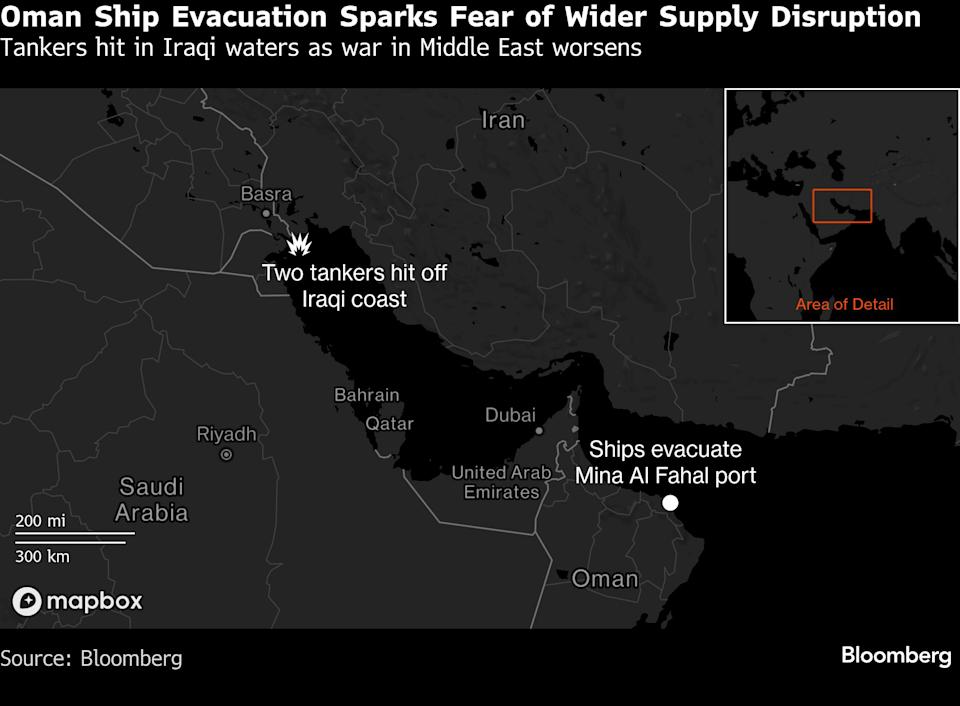
Mideast Shipping Emergency Escalates as Additional Tankers Struck in Gulf
Hedge Funds Compelled to Reduce Leverage as Overcrowded Tech Positions Become Risky
Trending news
MoreCrypto prices
More





