
The conflict with Iran risks diminishing Trump's most touted achievement

Market Reactions to the Iran Conflict
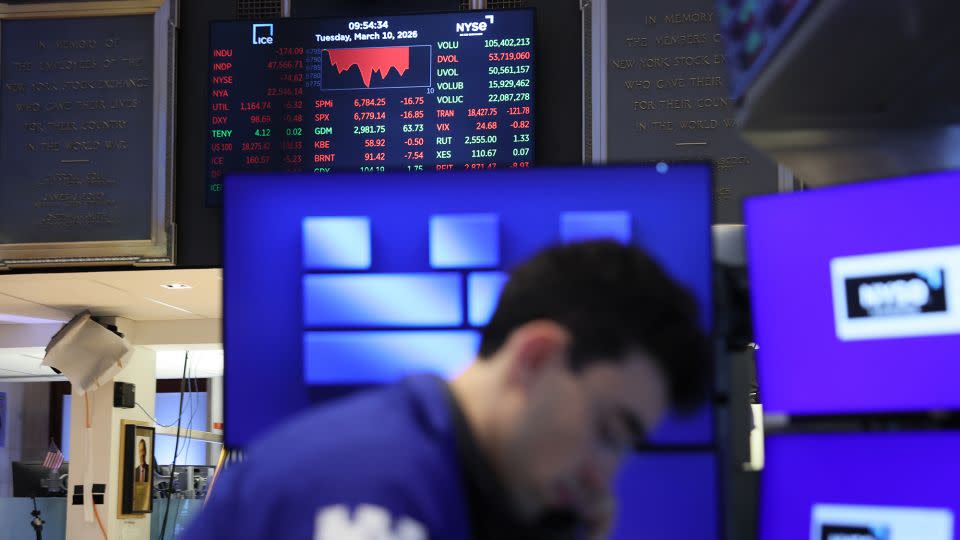
Since hostilities with Iran began, financial markets have shifted in ways that run counter to President Trump's economic objectives. Stock prices have dropped, bond yields have risen, and the US dollar has gained strength—developments that contrast with the administration's preferred outcomes.
Shifting Trends During Trump’s Second Term
Throughout much of President Trump’s second term, markets had generally moved in his favor: equities were on the rise, borrowing costs were falling, and the dollar was weakening, all of which the president frequently celebrated.
However, the ongoing conflict with Iran has reversed these trends. Stocks are declining, while both bond yields and the dollar are climbing.
This reversal complicates the president’s narrative, as he has often pointed to soaring stock markets, affordable borrowing, and a weaker dollar as evidence of his administration’s economic success. With the Republican majority in the House hanging by a thread, these market shifts could make it more difficult for Trump to appeal to voters in the upcoming midterms.
If the conflict persists, these unfavorable market movements could continue, undermining the president’s economic messaging.
Stock Market Performance
President Trump has repeatedly highlighted record-breaking stock market highs, such as when the Dow Jones Industrial Average surpassed 50,000 points last month, using these milestones as proof of his administration’s achievements.
During his State of the Union address on February 24, Trump remarked, “The stock market has done so well, setting all those records — your 401(k)s are way up.”
Yet, since reaching its peak on February 10, the Dow has fallen by over 5%, as investors grow anxious about the impact of the conflict on global oil supplies.
According to Sameer Samana, head of global equities and real assets at Wells Fargo Investment Institute, “The Middle East conflict and related news remain the primary drivers of market volatility.” He anticipates the conflict may last several weeks or months, but does not expect it to fundamentally alter the outlook for stocks. The duration of the conflict remains a key factor in determining market uncertainty.
The S&P 500 has declined by 1.5% this month, pushing the index into negative territory for the year. It has now been six weeks since the S&P last set a new record.
Mike Skordeles, head of US economics at Truist, commented, “It really comes back to the duration. How long is this going to take?”
Bond Market Developments
Since the onset of the conflict with Iran, the yield on the 10-year US Treasury note has increased, as concerns over rising oil prices and inflation prompt investors to sell bonds. The yield has climbed from 3.96% at the beginning of the month to 4.22% as of Wednesday.
Bond yields, which move inversely to prices, affect borrowing costs across the economy, including mortgage rates.
Historically, market reactions have sometimes forced the White House to reconsider policy proposals, such as tariffs, when both stocks and bonds were negatively affected.
The Trump administration has stated its intention to lower Treasury yields to make borrowing more affordable and to reduce the government’s interest payments on national debt.
Although the 10-year yield is currently at its highest point in a month, last week’s increase was the largest since April, when markets were unsettled by tariff uncertainties.
Rising energy prices could also fuel inflation, making the Federal Reserve less likely to cut interest rates—contrary to the president’s preference for lower rates.
The US Dollar’s Trajectory
A weaker dollar typically benefits US manufacturers by making American goods more affordable abroad and boosting exports, which aligns with the administration’s goal of revitalizing domestic manufacturing.
However, the conflict with Iran has led to a rebound in the dollar’s value. The US dollar index has risen 1.7% this month, as investors seek safe assets and anticipate fewer interest rate cuts from the Federal Reserve.
In January, Treasury Secretary Scott Bessent reiterated the United States’ commitment to a strong dollar policy. Nevertheless, a strengthening dollar runs counter to the administration’s ambitions for a manufacturing resurgence.
Prior to the conflict, the dollar index had fallen 0.7% in 2026, following a 9% drop in 2025. Now, the index is up nearly 1% for the year, though it remains 4.6% lower compared to the same period last year. (The index measures the dollar against a basket of major global currencies.)
Higher Treasury yields complicate efforts to lower borrowing costs, while a stronger dollar makes it harder for American exporters to compete. Falling stock prices also undermine the president’s emphasis on market highs. The future direction of these trends will depend largely on oil prices and how long the conflict endures.
Adam Turnquist, chief technical strategist at LPL Financial, noted, “There’s just going to be more headline risk in the market, more choppiness, until there’s more details on the timeline here.”
Disclaimer: The content of this article solely reflects the author's opinion and does not represent the platform in any capacity. This article is not intended to serve as a reference for making investment decisions.
You may also like
Nuclear ETFs Gain Attention Amid Escalating Energy Crisis Driven by Middle East Tensions
Can Shake Shack Maintain Its EBITDA Growth Through Operational Efficiency?
Viasat Broadens NexusWave Implementation Throughout EXMAR’s Gas Carrier Fleet

Trending news
MoreCrypto prices
More





