
Traders are closely watching Trump’s statements. But can they rely on what he says?

Unprecedented Turmoil in the Oil Market
After more than a decade of trading oil—including the chaotic days when prices briefly turned negative during the pandemic—Greg Newman, CEO of Onyx Commodities, says he’s never witnessed such a bewildering market environment.
“It feels like the market is broken. No one is sure how to react,” Newman remarks.
Onyx’s team of 60 traders, operating from London, Dubai, and Singapore, deals in contracts for crude oil, jet fuel, and more. They facilitate trades between producers, trading firms, and hedge funds, ensuring the market’s liquidity.
Accurately predicting price movements is essential in this field—mistakes can quickly put a company out of business.
However, the ongoing conflict in the Middle East has made forecasting oil’s direction more challenging than ever before.
While previous crises also brought volatility, major trading houses and hedge funds typically maintained some control over the market. This time, the situation is different—and much of the uncertainty stems from the actions and statements of US President Donald Trump.
Oil prices have become highly reactive to Trump’s shifting commentary on the US conflict with Iran, with his stance often changing within hours.
As Asian markets opened on Sunday night, oil surged toward $120 per barrel after Trump declared that paying more for fuel was a “small price to pay” for global peace. Yet by Monday afternoon, he described the war as “very complete, pretty much”, causing prices to collapse below $90—a record-breaking daily swing.
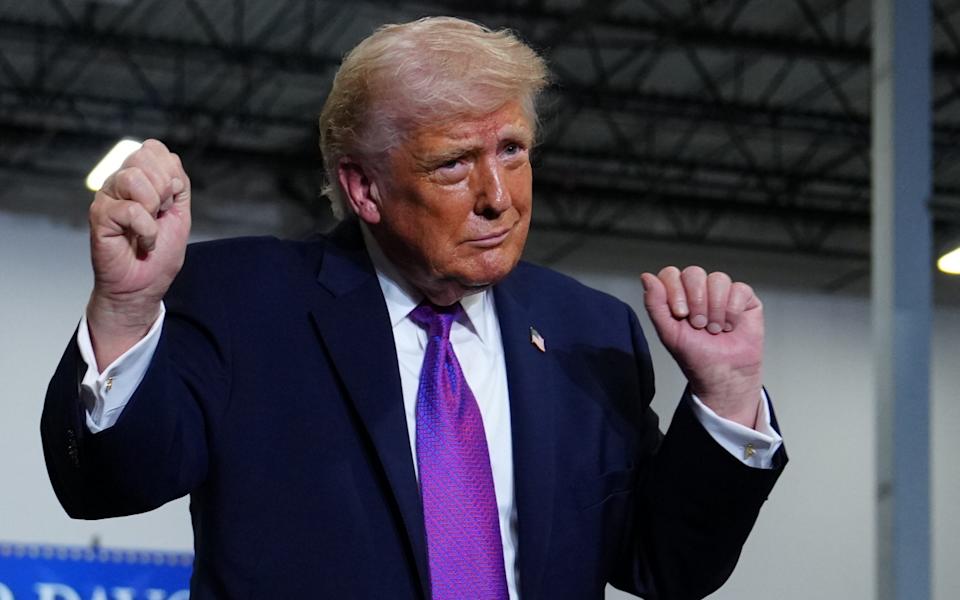
Trump’s subsequent threat to retaliate “20 times harder” if Iran blocked oil shipments sent prices climbing once again.
The Strait of Hormuz: A Critical Chokepoint
The outcome of the conflict is crucial for oil markets. Roughly 20% of the world’s oil supply passes through the Strait of Hormuz, a narrow waterway now closed by Iran since hostilities began. The International Energy Agency has called this disruption the most significant supply shock in history.
With Trump’s frequent and often contradictory statements, oil prices have become extremely volatile.
“This week, everyone in the industry feels like we’re stuck in a spin cycle,” says Pierre Chapuis, who leads petroleum and green fuels trading at Axpo, Switzerland’s largest energy company. “We’re glued to live news and our phones, constantly waiting for the next development.”
He adds, “It’s like binge-watching a suspenseful series—you know something big is about to happen, but you never know what’s next.”
Unreliable Headlines and Market Manipulation
The Trump administration has shown a strong willingness to push oil prices lower, with rumors circulating that the Treasury Department might even intervene in oil futures markets to control costs.
Trump’s public remarks often seem aimed at talking down prices, even as conflict rages near vital shipping lanes. But the inconsistency of his messaging has left many market participants unsure what to believe.
Earlier in the week, prices swung wildly after Energy Secretary Chris Wright posted on X (formerly Twitter) that the US Navy was escorting an oil tanker through the Strait of Hormuz—only to delete the post soon after. The White House denied the escort, calling it a mistake, but Iran’s foreign minister accused the US of manipulating the market with misinformation.
“US officials are spreading false news to sway the markets,” Seyed Abbas Araghchi wrote on X. “It won’t save them from the inflation they’ve created.”
Paul Gooden, global natural resources chief at Ninety One, describes a “PR battle” over oil prices. While Trump insists prices will soon “drop very rapidly,” Iran warns of $200 per barrel oil.
“Headlines are more unreliable than ever,” says Tamas Varga, analyst at PVM Oil Associates. “Since the Iranian crisis began, the impact of news headlines has grown dramatically.”
One London-based trader puts it bluntly: “If you trade solely on headlines, you’re going to get burned.”
Major Players Suffer Heavy Losses
- Some of the world’s largest hedge funds and trading firms have been caught off guard. Caxton Associates reportedly lost at least $600 million during this month’s turmoil.
- Trafigura, a top commodity trading company, had to secure an extra $3 billion in credit to cover margin calls.
- Citadel’s flagship Wellington fund dropped 2% last week, while Balyasny Asset Management fell 3.5%. Two senior energy traders at Balyasny recently departed, according to Bloomberg.
“Even the big players are struggling to keep up,” Newman observes. “Political intelligence and timely information are more important than ever.”
Some analysts believe they’ve identified a pattern in Trump’s approach: intense pressure to reach a deal, followed by rapid escalation and then sudden de-escalation. Adam Kobeissi, a US market commentator, argues that financial markets have become part of the negotiation process, with Trump acutely aware of how market performance shapes political perceptions.
Speculation about Trump’s market sensitivity resurfaced when he called a press conference after oil spiked to $120. The nickname “Taco” Trump—implying he backs down under pressure—originated after he retreated from the worst of his trade war following a market backlash.
This time, however, Trump’s answers have only added to the confusion. Asked whether the war was escalating or “very complete,” he replied, “You could say both.” The result: even greater uncertainty and volatility in oil markets.
Extreme Volatility Threatens the Market
Chapuis, with two decades of experience, describes this week as the most intense of his career. “We’re so focused that we forget about meals and meetings,” he says.
The current crisis is far more complex than previous shocks like the pandemic or Russia’s invasion of Ukraine. “There are so many overlapping events—Middle East tensions, US involvement, Europe’s potential role, the closure of Hormuz, and oil fields shutting down,” Chapuis explains. “We’ve never seen so many simultaneous disruptions.”
His team trades futures contracts, helping producers and retailers hedge against price swings. While some volatility is necessary for profits, excessive swings can be disastrous. “Too much volatility can destroy the market,” Chapuis warns.
Price swings of up to 30% can trigger margin calls, forcing traders to provide more capital or risk being wiped out—fueling even more instability.
“The current volatility is unhealthy, especially when driven by unpredictable headlines,” Chapuis says. “Funds accustomed to stable markets are struggling to adapt to this black swan event.”
Rumors are circulating about entire trading teams being dismissed after suffering heavy losses.
Further complicating matters, benchmark providers like S&P Global Energy (Platts) have had to revise their pricing methods after the Strait of Hormuz was closed, making it even harder to gauge fair value.
As a result, some traders are pulling back, leaving prices increasingly disconnected from fundamentals. “People are just doing the bare minimum,” Newman says. “It’s become unhealthy for the market.”
Staying Disciplined Amid Chaos
Chapuis no longer tries to react to Trump’s statements, given their inconsistency. Instead, he relies on a network of analysts monitoring developments in the Middle East and Iran around the clock. He and his team make decisions and stick to them, emphasizing strict discipline and clear strategies.
But that’s easier said than done. One veteran oil trader describes every moment away from his screens as “pure stress and anxiety.”
“You can’t trust that Trump knows what he wants to do,” he says.
For the past two Sundays, he’s been trading from home late at night as markets open, surviving on just a few hours of sleep before trading resumes each day.
“It’s nearly impossible to trade with confidence—everything can change in an instant,” he adds.
Just when things seem to settle, another unexpected message from the president appears, sending markets into another tailspin.
Disclaimer: The content of this article solely reflects the author's opinion and does not represent the platform in any capacity. This article is not intended to serve as a reference for making investment decisions.
You may also like
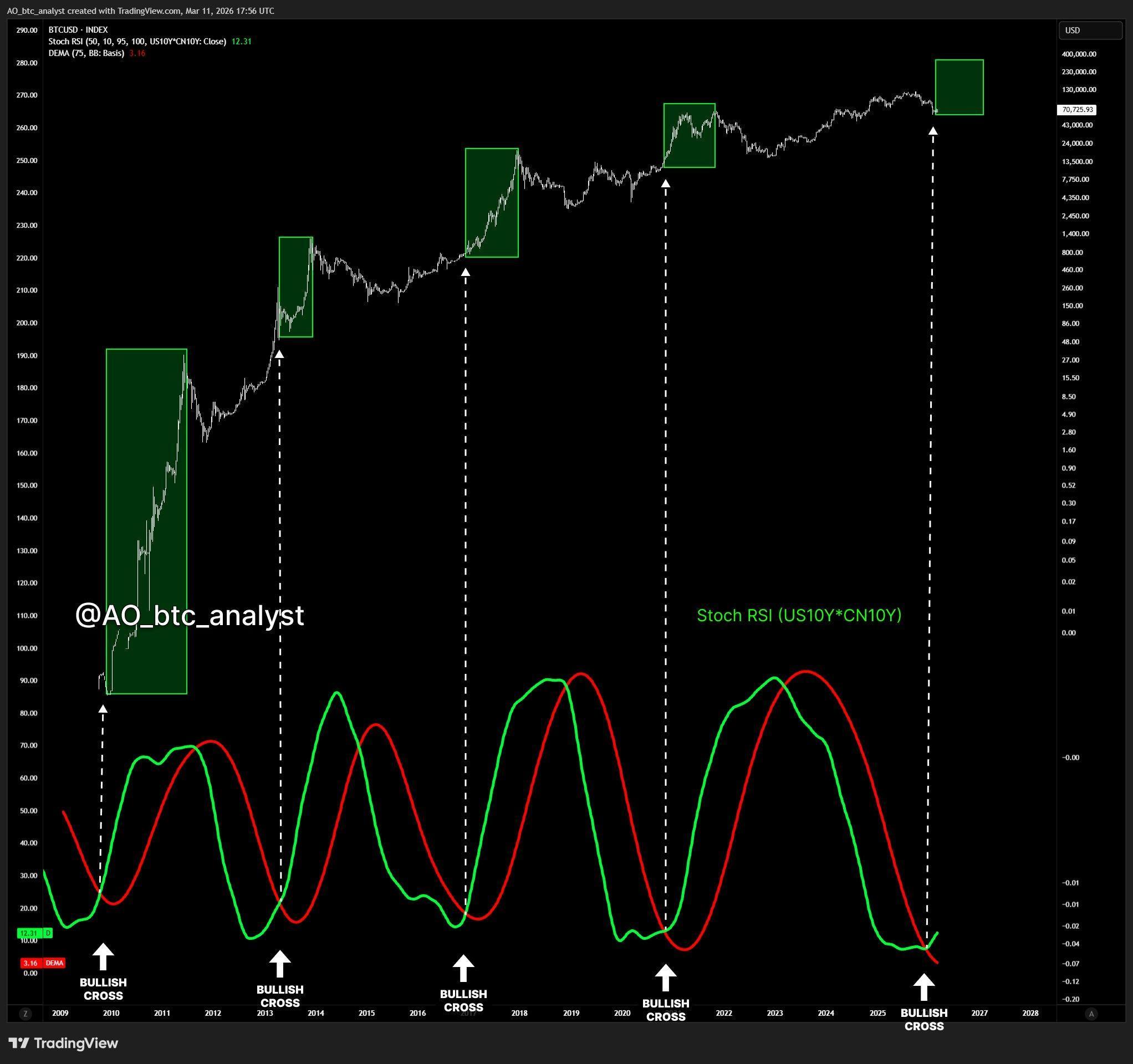
Bitcoin's 'extremely precise' macro signal puts $100K target back in play
PLTR to $40 - 3,000% rallies do not end with a gentle correction

Singapore-based MetaComp raises $35 million in funding backed by Alibaba
US: Trade investigations sustain policy uncertainty – Commerzbank
Trending news
MoreCrypto prices
More





