
News
Stay up to date on the latest crypto trends with our expert, in-depth coverage.

1Bitget UEX Daily | Trump Pledges to Safeguard Crude Oil Transport; Oil Prices Surge and Pull Back; Gold and Silver Plunge as Dollar Strengthens (March 04, 2026)2Locals prefer satoshis to dollars, says Africa Bitcoin chair Stafford Masie3'No longer a choice': Bitwise CIO says US-Iran strikes put crypto in primary market role
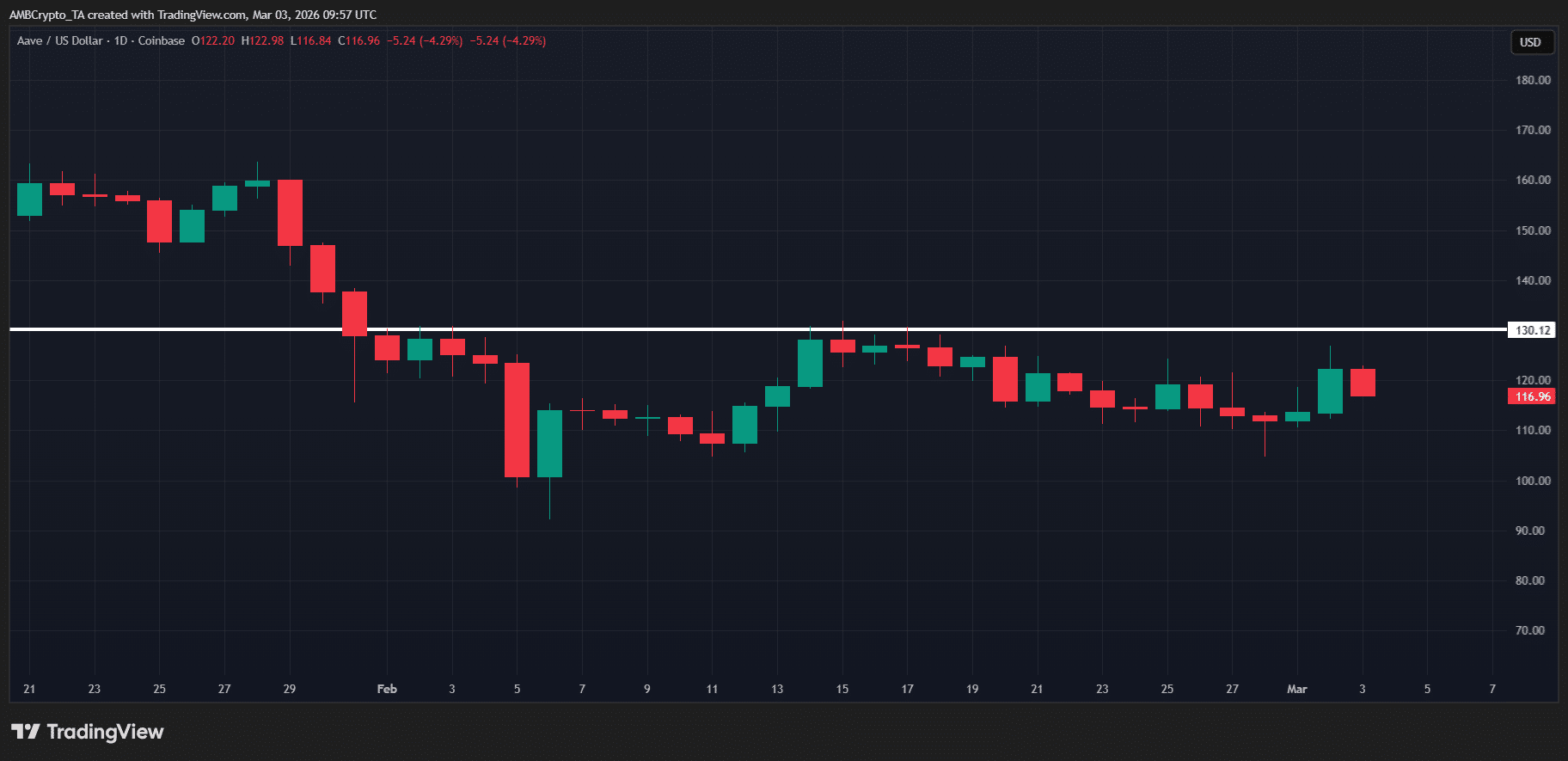
AAVE jumps 7% on $42.5 mln governance boost – Can it break $130?
AMBCrypto·2026/03/04 04:03

Trump’s ex-crypto advisor: US government must go beyond 'liking Bitcoin'
Cointelegraph·2026/03/04 03:21

Tilray's Agreement with Carlsberg: Evaluating the Growth Potential of a Newly Unlocked $100B+ Market
101 finance·2026/03/04 02:48
Smith+Nephew's CORI: Evaluating Its Standing Along the Orthopedic Robotics S-Curve
101 finance·2026/03/04 02:45
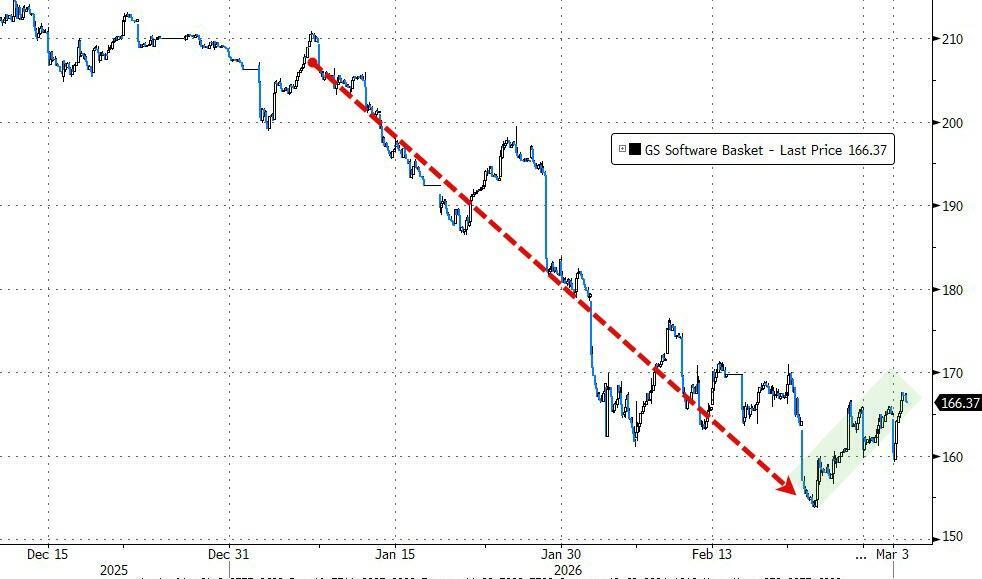
Which AI software stock takes center stage today? An analysis from a trend scout
101 finance·2026/03/04 02:06
Upland Software's Financial Results: A Typical 'Sell the News' Scenario Following Guidance Revision
101 finance·2026/03/04 02:06
Upland Software's Earnings: A Classic 'Sell the News' After a Guidance Reset
101 finance·2026/03/04 02:06
Flash
04:04
Midday Key Developments on March 47:00-12:00 Keywords: LMTS, ARQ, Patrick Witt, Clarity Act1. A certain exchange has included Limitless (LMTS) in its listing roadmap;2. On Polymarket, the probability of the Clarity Act being signed in 2026 has risen to 72%;3. The state of Arizona is advancing legislation to establish a state-level digital asset reserve fund using confiscated cryptocurrencies;4. White House official Patrick Witt refuted Jamie Dimon's views on stablecoins, stating that stablecoins are not deposits;5. The Governor of Indiana has signed the Bitcoin Rights Act, allowing digital assets to be used in the state's retirement plans;6. Stablecoin financial application ARQ has completed a $70 million financing round, with participation from Sequoia Capital and Founders Fund;7. Former crypto advisor to Trump: The US government’s support for bitcoin should not just remain at the “like” level, but should take practical action.
04:01
AMD CPU demand surges unexpectedly! Lisa Su warns: Supply will be tight格隆汇 March 4|According to Fast Technology, AMD CEO Lisa Su recently revealed at a Morgan Stanley conference that enterprise server CPU demand has unexpectedly surged, and the company is currently striving to catch up with orders. With the rise of AI Agent applications, the role distribution between CPU and GPU in modern AI workloads is changing, and the importance of CPUs in inference and agentic workflows has significantly increased. This has prompted hyperscale cloud service providers such as Meta to sign independent CPU procurement agreements with manufacturers like AMD and NVIDIA, shifting computing resources from GPU-dominated setups to diversified configurations. Lisa Su stated: "Although the GPU business is exciting, the demand for CPUs actually far exceeds my expectations. Even though I was already quite optimistic, customer feedback shows that the demand for CPU computing paired with AI has been severely underestimated." When asked whether AMD can meet enterprise demand for CPUs, Lisa Su revealed that there is indeed "tight supply," but this mainly stems from a sudden surge in customer interest over the past few quarters, giving the supply chain little time to adjust. She said the company is working closely with partners to resolve bottlenecks and expects capacity to expand next year. She believes AMD's processor architecture is ready to fully meet the massive computing power demands brought by AI training, inference, and agent applications.
03:53
Soaring oil prices push Indian rupee to a record lowGolden Ten Data reported on March 4 that the Indian rupee fell to a historic low and bond prices declined. The market is concerned that rising crude oil prices amid escalating conflict in the Middle East may push up inflation and widen the country's trade deficit. On Wednesday, the rupee against the US dollar once dropped 0.7%, marking the largest decline since the end of January, reaching 92.0875; meanwhile, the yield on India's 10-year benchmark government bond rose by 5 basis points to 6.72%. ANZ foreign exchange strategist Dhiraj Nim said: "Rising oil prices pose a direct risk to the rupee. We expect the Reserve Bank of India to slightly increase its intervention, but if oil prices remain high, we may have to accept a weaker rupee." He added that under the current risk-averse sentiment, his forecast for the rupee to reach 93 by the end of the year may be realized sooner. The rise in oil prices has renewed market concerns about inflation in India, as the country relies almost entirely on imports for its energy needs. At the same time, this also puts additional pressure on the ever-expanding trade deficit, thereby dragging down the local currency.
News