
Salesforce Shares Jump 3.41% on AI-Driven Growth and $50B Buyback as $3.93B Volume Surges 36% to Rank 20th in Trading Activity

Market Snapshot
Salesforce (CRM) shares rose 3.41% on February 25, 2026, closing the day with a trading volume of $3.93 billion, a 36.35% surge compared to the previous day. The stock ranked 20th in trading activity for the session, reflecting heightened investor interest. The upward momentum followed the company’s announcement of first-quarter revenue guidance exceeding Wall Street expectations and a $50 billion share repurchase program. Despite a post-earnings dip in after-hours trading, the intraday performance underscored strong short-term demand for the stock, driven by optimism around its AI-driven growth strategy and robust fourth-quarter results.
Key Drivers
Salesforce’s Q4 fiscal 2026 results and forward guidance positioned the company as a leader in AI-integrated enterprise software. The firm reported revenue of $11.2 billion, narrowly beating the $11.18 billion consensus estimate, with adjusted earnings per share (EPS) of $3.81 surpassing expectations of $3.04. This outperformance was bolstered by a 12% year-over-year revenue growth and a 14% increase in total remaining performance obligations (RPO) to $72.4 billion. CEO Marc Benioff highlighted the strategic shift toward AI through the Agentforce platform, which automates workflows and administrative tasks, as a key growth lever. The platform’s annual recurring revenue surged 169% to $800 million, signaling strong adoption of Salesforce’s agentic AI capabilities.
The company’s first-quarter revenue guidance of $11.03–$11.08 billion exceeded the $10.99 billion estimate, while its fiscal 2027 revenue forecast of $45.8–$46.2 billion fell modestly short of the $46.06 billion consensus. Despite the revenue miss, the earnings outlook aligned closely with expectations, with adjusted EPS guidance of $13.11–$13.19 per share. Analysts noted that Salesforce’s organic revenue growth is projected to accelerate in the second half of fiscal 2027, supported by its AI-driven transformation and the integration of Informatica, which contributed $399 million to Q4 revenue. The acquisition is expected to enhance Salesforce’s data management capabilities, further solidifying its position in the enterprise software market.
A $50 billion share repurchase program and a 5.8% dividend increase reinforced investor confidence in the company’s financial health. These measures, coupled with a 15% year-over-year rise in operating cash flow to $15 billion, demonstrated Salesforce’s commitment to shareholder returns. However, the stock declined 4.2% in after-hours trading as the fiscal 2027 revenue forecast raised concerns about decelerating growth in a competitive software landscape. Broader market anxieties around AI-driven disruption in the sector also pressured the stock, despite Salesforce’s emphasis on Agentic AI as a “tailwind” for long-term value.
The company’s long-term ambitions, including a revised $63 billion revenue target for fiscal 2030 (up from $60 billion in October 2026), underscore its confidence in the AI and cloud transition. Benioff’s vision of transforming SalesforceCRM+3.41% into an AI-driven data and cloud platform resonated with analysts, who highlighted the strategic importance of Agentforce in automating enterprise workflows. The introduction of Agentic Work Units (AWUs) as a new metric—quantifying discrete AI-driven tasks—further emphasized the tangible value of Salesforce’s AI integration, contrasting with token-based measurements used in other AI applications.
While the stock’s intraday gains reflected optimism about these initiatives, the post-earnings selloff highlighted lingering uncertainties. Market participants remain cautious about the broader software sector’s valuation and the pace of AI adoption, which could impact Salesforce’s ability to sustain its 10–11% annual revenue growth. Nevertheless, the firm’s strong backlog, with current RPO at $35.1 billion, and its aggressive capital allocation strategy position it to navigate near-term volatility while capitalizing on long-term AI-driven demand.
Disclaimer: The content of this article solely reflects the author's opinion and does not represent the platform in any capacity. This article is not intended to serve as a reference for making investment decisions.
You may also like
Eric Trump Accuses Banks of Blocking Much Higher Crypto Yields

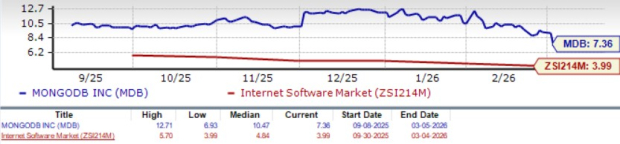
Should you consider buying, selling, or holding MongoDB shares after their Q4 earnings report?
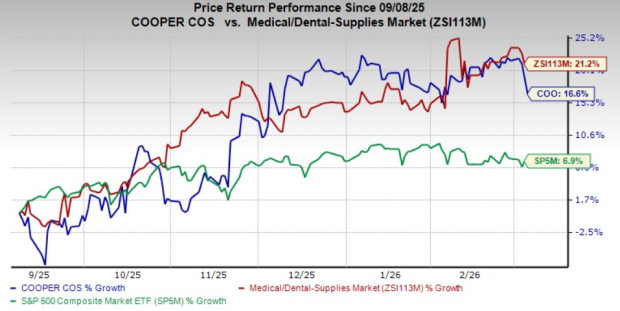
COO Drops Even After Surpassing Q1 Earnings Expectations and Upgrading FY26 Forecast
Aecon’s Backlog Execution Could Fuel Next-Phase Re-rating Amid Valuation Tension
Trending news
MoreCrypto prices
More





