
Lowe’s Shares Slump 5.59% Amid 59.12% Volume Surge Ranking 70th as Economic Pressures and Weak Housing Market Overshadow Earnings Beat

Market Snapshot
Lowe’s (LOW) shares fell 5.59% on February 25, 2026, closing with a trading volume of $1.46 billion, a 59.12% surge from the previous day’s volume, and ranking 70th in market activity. Despite the significant increase in trading volume, the stock’s decline contrasted with its year-to-date performance of a 9.6% gain. The drop followed the company’s earnings report, which showed quarterly revenue of $20.58 billion and $1.98 earnings per share (EPS), exceeding estimates of $20.34 billion and $1.94, respectively. However, the stock’s weakness was driven by a pessimistic outlook for fiscal 2026, with full-year EPS guidance of $12.25–$12.75 falling short of the $12.90 consensus estimate.
Key Drivers
The primary factor behind Lowe’sLOW-5.59% stock decline was its cautious guidance for 2026, which underscored “ongoing uncertainty” in the home improvement market. Despite beating Q4 earnings and revenue expectations, the company projected flat to 2% growth in comparable store sales for the year, well below the 2% growth analysts had anticipated. CEO Marvin Ellison attributed the outlook to persistent economic pressures, including high borrowing costs, weak consumer sentiment, and a sluggish housing market. These factors have dampened demand for large home projects, with customers deferring big-ticket DIY and remodeling expenditures.
The company’s warning was amplified by similar comments from rival Home Depot, which reported its own earnings the prior day. Home Depot executives highlighted that homeowners are increasingly cautious about job security, housing affordability, and broader economic instability. The home turnover rate—the rate at which homes change hands—hit a 30-year lowLOW-5.59% in 2025, according to Redfin, as buyers faced affordability challenges and sellers hesitated to trade in low mortgage rate properties. This stagnation has reduced demand for home improvement services, a critical segment for both retailers.
Lowe’s also faced margin pressures from rising operational costs, including interest and depreciation expenses, which cut into net income despite revenue growth. While the company’s Total Home strategy drove 1.3% comparable sales growth in Q4—better than the 0.2% expected—its full-year adjusted operating margin guidance of 11.6%–11.8% fell short of the 11.77% achieved in fiscal 2025. Analysts noted that the company’s conservative guidance, particularly the low-end of flat same-store sales, failed to meet bullish expectations, contributing to the stock’s post-earnings selloff.
Strategic investments, such as the $8.8 billion acquisition of Foundation Building Materials, signaled Lowe’s intent to strengthen its position in the professional builder market. However, these moves could not offset broader macroeconomic headwinds. The company acknowledged that while tax refunds may provide a modest boost to consumer spending, the impact on home improvement projects remains uncertain. Additionally, prolonged high mortgage rates are expected to keep existing home sales and new construction subdued, further constraining demand.
The market’s reaction also reflected concerns about the broader economic environment, including the potential impact of Trump’s recent tariff hike on supply chains and consumer confidence. Lowe’s CEO emphasized that the company is “well-positioned to take share regardless of the macro environment,” but investors appeared skeptical given the conflicting signals of strong quarterly results and a weak outlook. The stock’s decline, despite a 15.5% gain in 2026 through February 25, highlighted the tension between near-term performance and long-term uncertainty in the home improvement sector.
Disclaimer: The content of this article solely reflects the author's opinion and does not represent the platform in any capacity. This article is not intended to serve as a reference for making investment decisions.
You may also like
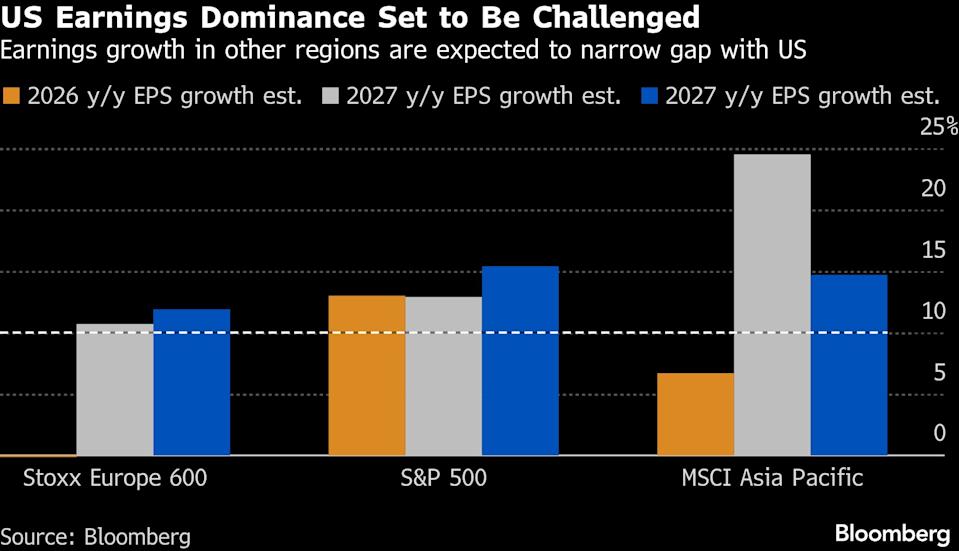
Global profits indicate a move away from the US as the S&P 500 declined
礼来惊吓,诺和诺德救场!减肥药市场前景依旧令众玩家垂涎

SaaS enters, SaaS exits: Discover the forces behind the SaaSpocalypse

The discussion within the Fed regarding how AI is affecting things

Trending news
MoreCrypto prices
More





