
News
Stay up to date on the latest crypto trends with our expert, in-depth coverage.

1Bitget UEX Daily | Trump Pledges to Safeguard Crude Oil Transport; Oil Prices Surge and Pull Back; Gold and Silver Plunge as Dollar Strengthens (March 04, 2026)2Locals prefer satoshis to dollars, says Africa Bitcoin chair Stafford Masie3'No longer a choice': Bitwise CIO says US-Iran strikes put crypto in primary market role
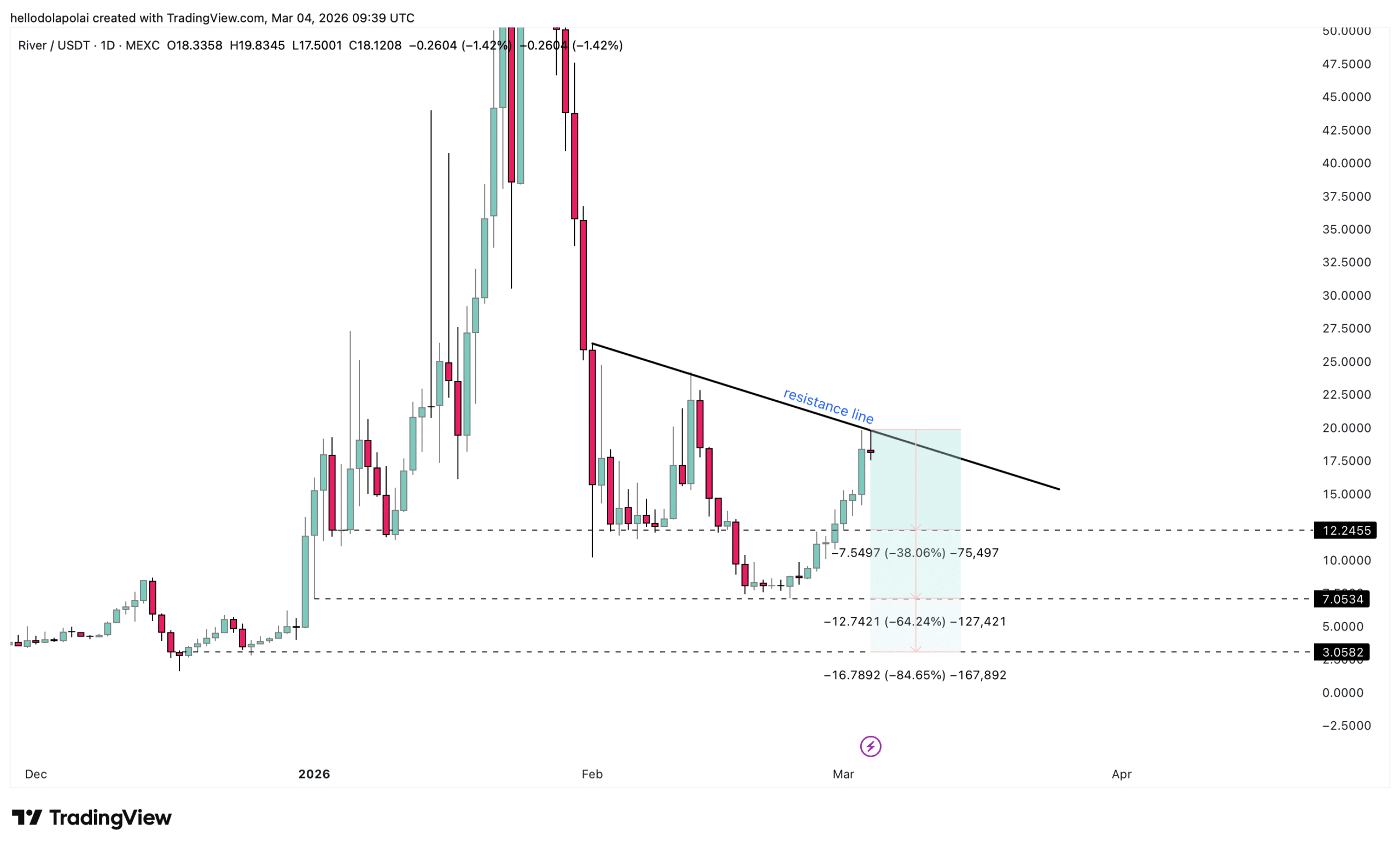
RIVER tops crypto gains with 34% surge – But ONE zone could end it fast
AMBCrypto·2026/03/05 02:03
TCI's $53.6B Whale Wallet: What the 13F Reveals About the Smart Money's Skin in the Game
101 finance·2026/03/05 01:55
MSTY's Nightmare ETF: The 67% Yield That's Actually a 14.65% Return of Capital Trap
101 finance·2026/03/05 01:54
Tanker Shortage Worsens Oil Crisis as Iran Conflict Escalates
101 finance·2026/03/05 01:48

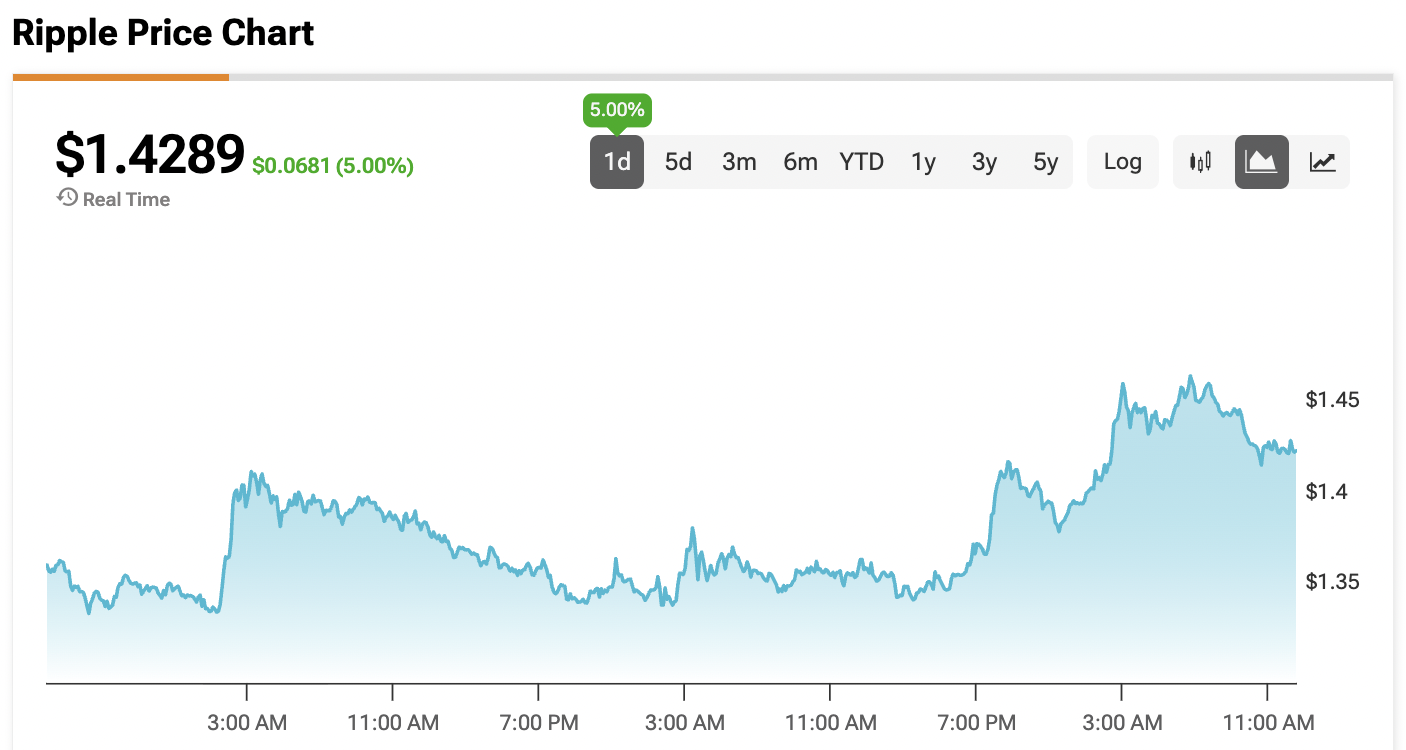
XRP Price Shoots for $1.95 as Institutional Cash Reaches a Fever Pitch
Tipranks·2026/03/05 01:39
NVIDIA’s Rapid S-Curve Growth: Constructing the Foundation for AI Infrastructure
101 finance·2026/03/05 01:18
How Changes in Policy and Global Geopolitical Strains Are Transforming Bitcoin Trading
101 finance·2026/03/05 01:15
Flash
02:14
Japanese major labor unions demand a 6.46% pay raise, higher than last yearGolden Ten Data reported on March 5 that one of Japan's largest labor unions will demand wage increases higher than last year's levels from employers. The Bank of Japan is closely monitoring wage trends to assess the situation ahead of its policy meeting later this month. According to statistics released on Thursday, 466 unions affiliated with UA Zensen are seeking an average wage increase of 6.46% for regular employees. Last year, the union demanded a 6.11% increase, with the final agreement reached at 4.75%. UA Zensen represents about 1.9 million members, covering industries such as retail, catering, materials, and services. The organization plans to announce the first batch of wage agreement statistics on March 19. The Bank of Japan is closely watching the negotiations to see if strong wage growth will boost consumption, thereby providing signs of sustained price increases driven by demand—a key condition for its gradual policy normalization through interest rate hikes.
02:11
Goldman Sachs: Recent Risk Asset Pullback is a Buying Opportunity, Not the Start of a Long-term Bear MarketBlockBeats News, March 5th, according to Wall Street News, amid global market turbulence, Goldman Sachs goes against the trend and believes that the recent market pullback is a buying opportunity rather than the beginning of a long-term bear market, behind this is the firm's optimistic expectation for the "four-week recovery" of the Strait of Hormuz circulation.
Goldman Sachs' strategy team, led by Peter Oppenheimer, wrote in a report on Wednesday that although risk assets are facing "significant resistance" from concerns arising from the Middle East conflict and AI disruptive impact, the resilience of economic fundamentals and strong corporate profit growth mean that the depth and duration of this pullback will be limited.
Goldman's optimism about the global market is largely based on the expectation of a rapid recovery in the energy supply chain. Goldman's Chief Oil Strategist, Daan Struyven, expects that blocked oil shipments in the Strait of Hormuz will remain at the current extremely low level in the next 5 days, then recover to 70% of normal volumes within two weeks, and achieve 100% full normalization in four weeks.
02:09
an exchange Analyst: Brown Paper Reveals Wait-and-See Attitude, Iran Conflict Disagreement Intensifies, BTC Bounce High Liquidity StandoffBlockBeats News, March 5th. On the eve of the Fed's March interest rate meeting, the latest "Beige Book" was released, summarizing the results of a survey of all 12 Federal Reserve districts as of February 23. The report indicates that while the data shows stabilization, both businesses and consumers remain cautious, the momentum of job expansion has slowed down, and inflation pressure remains sticky. It is worth noting that the report does not fully reflect the subsequent effects of the Supreme Court overturning part of the tariff policy and the escalation of the Middle East conflict.
Specifically, observations show that the hiring market is becoming more conservative, with most companies delaying expansion plans; inventory strategies are shifting towards "just-in-time ordering." In some regions, labor and consumption are simultaneously under pressure due to immigration enforcement. On the pricing front, insurance, energy, and raw material costs continue to be passed on to the end consumer, leading to a "shrinkflation" effect. Overall, the economy is not in a recession, but the intertwined growth momentum and policy uncertainties are evident.
Meanwhile, a procedural Senate vote in the United States failed to stop Trump's ongoing military actions against Iran, keeping the costs of conflict and energy shocks as uncertainties. The market is repricing risk assets amid high oil prices and expectations of high-interest rates.
Turning to the crypto market, the price of BTC rapidly surged from around $66,000 to $74,000 and then retraced, in a typical liquidity sweep. The $74,000 range is seeing a gathering of short liquidation orders; long leverage liquidation points are concentrated around $70,000, while there is still secondary liquidity near $64,000.
In conclusion, macro-level uncertainties are increasing, and in the short term, BTC's structure continues to be dominated by liquidity battles within a range. The key focus remains on whether high-level short positions will be further squeezed and transformed into trend momentum.
News