
News
Stay up to date on the latest crypto trends with our expert, in-depth coverage.

1Bitget UEX Daily|Iran Conflict Boosts Oil Prices;U.S. Plans Global AI Chip Controls;Non-Farm Data Imminent (2026-03-06)2Broadcom FY2026 Q1 Earnings: AI Revenue Doubles, Record Results, Strong Guidance, $10B Buyback3If the Strait of Hormuz is closed for another 3 days, 3.3 million barrels of crude oil in the Middle East will be forced to halt production, with Iraq being the hardest hit!

2 Losing Stocks We’re Still Buying and 1 We’re Passing On
101 finance·2026/03/06 13:31
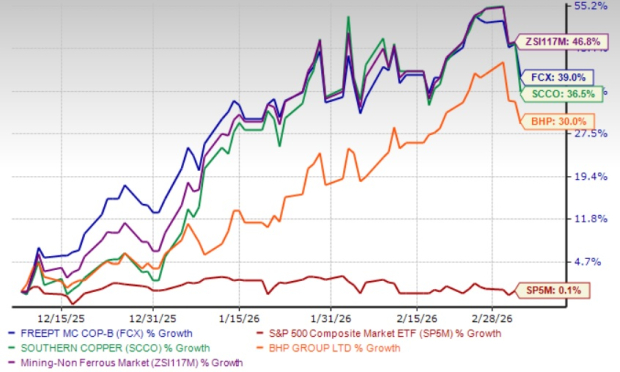
Freeport-McMoRan's Stock Surges 39% Over Three Months: What's the Best Way to Invest?
101 finance·2026/03/06 13:22
Hormuz Strait Shipping Grinds to a Halt with Only One Sanctioned Oil Tanker Attempting Passage
101 finance·2026/03/06 13:09
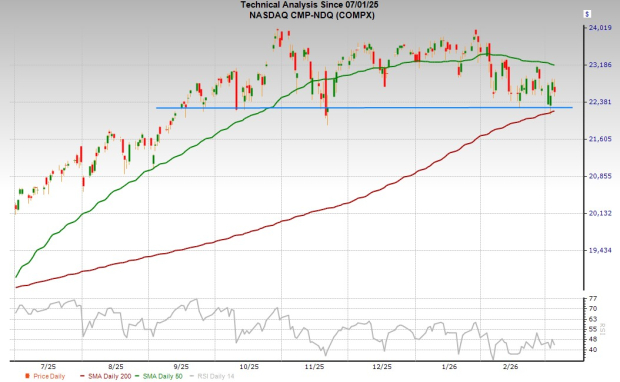
Best Artificial Intelligence Technology Shares to Purchase During the March Downturn
101 finance·2026/03/06 13:06
Flash
13:24
The International Energy Agency remains inactive, with no collective reserve release plan at present.Golden Ten Data reported on March 6 that the International Energy Agency (IEA) stated that, given the ample global oil supply and the seemingly temporary impact, there is currently no need to release emergency oil reserves during the Middle East crisis. IEA Executive Director Fatih Birol told reporters in Brussels on Friday: "All options are on the table, but at this stage, there are no plans for collective action. There is plenty of oil in the market, even to the extent of a significant surplus." Birol acknowledged that some IEA member countries might adopt individual policies in response to the current turmoil. According to Kyodo News, citing informed government sources, the Japanese government is considering releasing oil reserves to address the situation with Iran. For now, Birol said: "What we are facing is a temporary disruption, a logistical disruption, not an oil shortage."
13:23
XRP Ledger XLS-65 Amendment Introduces Native Single Asset Vaults for DeFiXLS-65 enables integration of single-asset vaults on the XRP Ledger, allowing users to pool XRP, IOU, or MPT and obtain proportional shares of MPT.
XRPL Commons backed the amendment after 257 Devnet tests, which covered exchange logic, access controls, and asset safeguards.
The XRP Ledger has launched a new DeFi feature through the XLS-65 amendment. The proposal introduces new native single-asset vaults that let multiple users pool a single asset into a shared on-chain structure. The model works at the protocol level, so it does not depend on smart contracts or external bridges.
Under XLS-65, a vault can only hold one asset type. That asset can be XRP, an IOU, or a Multi-Purpose Token (MPT). When users deposit funds, the ledger assigns them proportional shares, which are issued as MPT tokens and represent a user’s ownership in the vault. When a holder returns the shares, they can withdraw the matching portion of the underlying asset.
https://t.co/CJQUR7bHRn
— XRPL Commons (@xrpl_commons) March 5, 2026
This structure gives the XRP Ledger a native system for pooled asset management and creates the foundation for DeFi products that require shared liquidity. That includes lending systems, yield tools, and treasury management services. Because the feature sits inside the ledger, it inherits the speed and low-cost model already associated with XRPL.
The amendment also gives vault creators control over participation rules. A vault can remain open to all users or restrict access through the Permissioned Domains standard.
Last month, CNF covered the launch of XLS-85 on the XRPL Mainnet, which extended native escrow support beyond XRP to Trustline IOUs and Multi-Purpose Tokens.
XRP Ledger Vault Rules, Security and Withdrawals
XRPL Commons voted in favor of XLS-65 after completing a full test process on Devnet. The review included 257 test cases across 10 categories. The testing covered every transaction type linked to the amendment. It also covered edge cases and hostile scenarios designed to expose weak points.
The test results showed full alignment between the specification and the Devnet implementation. XRPL Commons also verified owner-only functions, credential-based access rules, immutable field controls, reserve handling, and transfer fee bypass provisions.
The proposal also includes built-in safeguards for asset handling. Frozen assets cannot enter a vault, and withdrawals remain limited while those assets are frozen. Issuers can still receive frozen funds back. Vaults cannot be deleted until all assets and shares are withdrawn.
XLS-65 is also built to work with prior upgrades to the XRP Ledger. It connects to XLS-66 through a LossUnrealized field that allows paper losses to be reflected during withdrawals.
This month, CNF also reported on a new XRPL sidechain proposal that would bring American-style options and up to 200x leverage to the XRP Ledger.
At press time, XRP price traded at
$1.39
, down
2.72%
in 24 hours, while trading volume stood at $2.24 billion.
13:22
According to the latest disclosed joint venture plan, the Indian partner will obtain a controlling stake in the joint venture to be established by Visionwave Holdings Inc.This equity structure arrangement shows that the Indian partner will hold more than 50% of the shares in the joint venture entity, meaning it will have dominant control over the business decisions of the joint venture. The configuration of controlling rights in a joint venture usually reflects a balance among the parties in terms of resource input, market position, or technological contribution. Visionwave Holdings Inc's decision to transfer majority equity this time may be based on strategic considerations, aiming to quickly enter the Indian market by leveraging the advantages of its local partner. This equity structure plan still needs to be approved by the relevant regulatory authorities. If it is ultimately implemented, it will mark an important step forward in Visionwave Holdings Inc's strategy to expand in the Asian market.
News