
News
Stay up to date on the latest crypto trends with our expert, in-depth coverage.

Endeavour Silver hints at mine-life extension in Mexico
Mining.com·2026/06/18 15:48
Fireblocks unveils Security Center for enhanced platform visibility
Cryptobriefing·2026/06/18 15:33

Crypto for Advisors: Trading the bitcoin cycle
CryptoNewsNet·2026/06/18 15:18

Vantage Secures Position on the Fortune Crypto Innovators List, Highlighting Cross-Market Trading Innovation
The Bitcoin News·2026/06/18 15:15
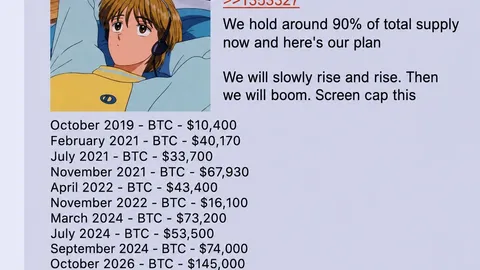
Bitcoin to $145K by October? Why this 'crazy accurate' 4chan prediction is sketchy
Cointelegraph·2026/06/18 14:51
Congo miners seek delay to 5% worker equity rule before July deadline
Mining.com·2026/06/18 14:51
Is Bitcoin Mining Becoming an Energy and Infrastructure Business?
BeInCrypto·2026/06/18 14:48
Stafford Masie on Why Bitcoin Is the Ultimate Tool for Africa’s Growth
CoinEdition·2026/06/18 14:48
China to open lithium futures to overseas traders next month
Mining.com·2026/06/18 14:36
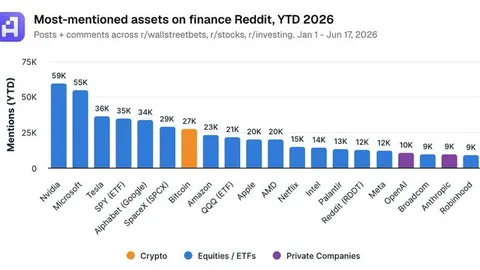
Nvidia Remains Finance Reddit’s Most Discussed Asset as BTC Ranks #7
CoinEdition·2026/06/18 14:30
Flash
00:03
AiCoin | 6.25 Snapshot: Whale Transfers, Gold Breakthrough, Regulatory Tightening1. Trump: Iran has informed the United States that it is not charging transit fees in the Strait of Hormuz. 2. Schnabel: To achieve the 2% inflation target, the European Central Bank still needs to raise interest rates. 3. The spot gold price has broken through $4,000 per ounce, rising 0.43% during the day. 4. A certain exchange has officially launched Bitcoin trading services; 35 million clients with $12 trillion in assets under management can access it. 5. U.S. Congressman French Hill: The Bitcoin Clarity Act will be passed and become law. 6. Cathie Wood: U.S. inflation will fall sharply; potential inflation as measured by unit labor costs is only 0.5%. 7. BlackRock transferred 7,160 BTC and 98,850 ETH to a certain exchange, with a total value exceeding $600 million. 8. South Korean officials met with the U.S. SEC to discuss unified cryptocurrency regulatory rules. These are the top highlights from the past 24 hours. Click to read the full article: https://www.aicoin.com/article/541305
2026/06/24 23:59
Sonic announces no additional $S issuance this year and is exploring the cessation of token inflation mechanismJinse Finance reported that on June 25, Sonic posted on the X platform: “According to our original tokenomics model, 47.625 million $S were to be issued annually to support the development of the Sonic ecosystem. The first issuance quota was authorized on June 18, 2025. However, this year we did not increase the supply. We are actively working towards ensuring that $S circulation is no longer expanded through new issuances. The only issue still pending is the validator reward mechanism, as the network needs to fund its own security—we are researching how to address this. This decision is a direct response to long-standing demands from community members and stakeholders. As our work progresses, we will share more details.”
2026/06/24 23:59
Machi's 25x leveraged long position on ETH was liquidated, with a total loss exceeding $35.4 millionMachi's 25x leveraged ETH long position was liquidated, resulting in a loss of 1.9 million US dollars. Subsequently, he opened another 25x leveraged ETH long position. His total accumulated losses have now exceeded 35.4 million US dollars. (Onchain Lens)