
News
Stay up to date on the latest crypto trends with our expert, in-depth coverage.

1Bitget UEX Daily | Trump Pledges to Safeguard Crude Oil Transport; Oil Prices Surge and Pull Back; Gold and Silver Plunge as Dollar Strengthens (March 04, 2026)2Locals prefer satoshis to dollars, says Africa Bitcoin chair Stafford Masie3'No longer a choice': Bitwise CIO says US-Iran strikes put crypto in primary market role

Analyst Says 6 More Days for XRP Sideways Trend, Then a Climb Toward $10. Here’s Why
TimesTabloid·2026/03/04 13:06
Is Virtus KAR Small Cap Sustain Growth A (PSGAX) Currently a Top Choice Among Mutual Funds?
101 finance·2026/03/04 13:03
Is Victory Aggressive Growth (USAUX) Currently a Top Choice for Mutual Fund Investors?
101 finance·2026/03/04 13:03

Final call for the ‘punk’ who brought chaos to BrewDog
101 finance·2026/03/04 13:03

‘Devastated’ BrewDog founder says sorry to employees and shareholders
101 finance·2026/03/04 13:03
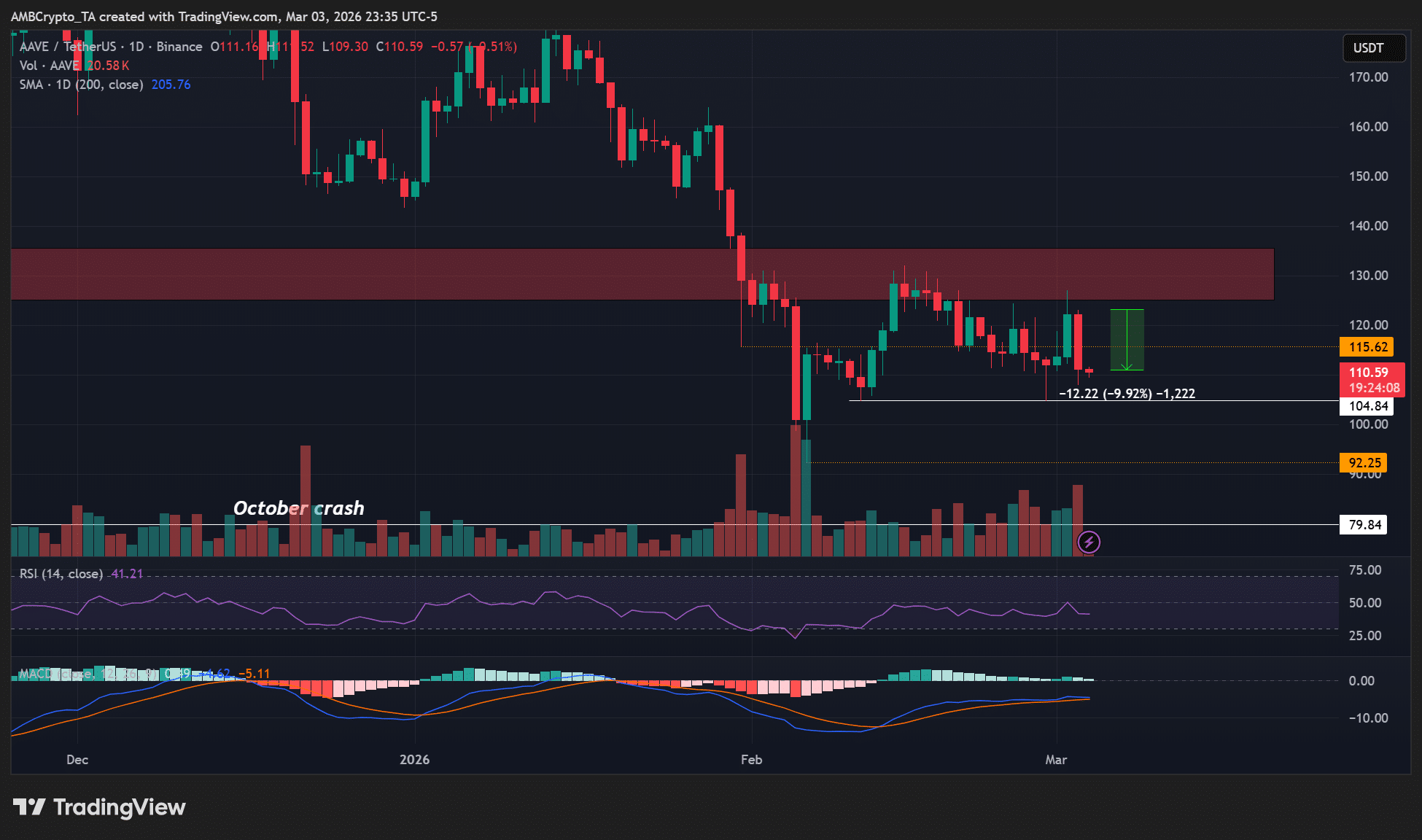
‘Undisclosed voting power’ – ACI’s exit claim sends AAVE tumbling 10%
AMBCrypto·2026/03/04 13:01
Japan to Test Blockchain Settlements in Regulatory Sandbox
Coinspaidmedia·2026/03/04 13:00
Japan to Test Blockchain Settlements in Regulatory Sandbox
Coinspaidmedia·2026/03/04 13:00
Flash
13:13
A whale swapped 102 BTC for 3489 ETHBlockBeats News, March 4th, according to Onchain Lens monitoring, a whale swapped 102 BTC (approximately $7.23 million) for 3,489 ETH via ThorChain at a rate of 0.02923.
13:03
Caixin Futures: Middle East conflict drives up oil product costs, chemical products show divergent trends(1) In terms of crude oil, the ongoing confrontation between the US and Iran has led to decreased traffic through the Strait of Hormuz, tanker attacks, the shutdown of Saudi Arabia’s largest refinery, and rising oil and gas delivery costs. Although the US has promised insurance guarantees and escort services, ships are voluntarily halting operations at ports. The supply side of SC crude oil and downstream petroleum products is directly impacted, maintaining strong momentum. Close attention should be paid to developments in the situation. (2) Regarding fuel oil, domestic dependence on high-sulfur fuel oil imports is high, with Iranian imports accounting for 20%. The supply gap, combined with rigid demand for marine fuel in the Middle East, is driving a strong upward price trend. (3) For glass, downstream processing plants are gradually resuming operations, with procurement mainly driven by rigid demand from mid- and downstream sectors, resulting in sluggish transactions. The fundamentals are not strong, but commodity sentiment remains robust, supported by seasonal expectations and policy windows, and prices are expected to fluctuate. (4) For soda ash, enterprises are operating with volatility, production is increasing, and supply is ample. Downstream demand is average, with a strong wait-and-see attitude and moderate low-price transactions. The short-term macro outlook is warm, but mid-term supply remains high, with limited drivers, so price movements are expected to be volatile. (5) For caustic soda, high spot prices are not seeing good transactions, and with new production capacity coming online, inventory accumulation is expected to continue. Prices are still at a premium to spot, and the market is expected to remain at the bottom with fluctuations; attention should be paid to warehouse receipt pressure. (6) For methanol, spot prices are volatile, weekly factory inventories are increasing, and port inventories are slightly decreasing. Geopolitical conflicts will inevitably cause delays and reductions in imported supplies, supporting a phase of bullish market prices, with short-term prices remaining high and highly volatile.
13:03
Caixin Futures: Divergent Strategies in Agricultural Futures Market; Soybeans Remain Strong While Eggs and Live Hogs Are Bearish⑴ Regarding palm oil, US soybeans continue their upward trend, with strong exports, improved biofuel demand, and Middle Eastern geopolitical tensions supporting oil prices. Domestic soybean oil maintains support at 8,300-8,330 yuan/ton, and spot prices are rising in tandem. Oils, as a weaker link in crude oil transmission, show a more volatile and less smooth upward trend. ⑵ Regarding soybean meal, internationally, the US has raised global import tariff rates, which may weaken China's willingness to purchase US soybeans. USDA forecasts indicate an increase in US soybean planting area and production, overall bearish. Domestic soybean meal inventories remain high, supply pressure persists, and it is recommended to treat the market with a range-bound volatility approach; currently, shorting at high prices is advisable. ⑶ Regarding corn, low year-on-year inventories at northern ports are the main logic behind strong prices, but losses among downstream enterprises and warmer weather unfavorable for storage may limit upward momentum. Short-term volatility is expected to be limited, and the strategy should focus on buying on dips. ⑷ Regarding live hogs, the absolute number of breeding sows remains above the normal retention level, indicating greater mid-term supply pressure. The second round of fattening before the New Year has not been fully digested, and post-holiday demand is extremely weak, with spot prices continuing to decline. It is recommended to mainly short at high prices and pay attention to changes in slaughter volume. ⑸ Regarding eggs, post-holiday sales recovery is slow, supply remains high in February and March, and terminal demand is in the off-season. It is recommended to mainly short at high prices and monitor the subsequent pace of inventory replenishment by traders.
News